
ELEVATE K-12
YEAR
2022
ROLE
UI/UX Design Lead
TEAM
UI/UX Design Lead: Cathy Yang
User Research Lead: Tony Stedge

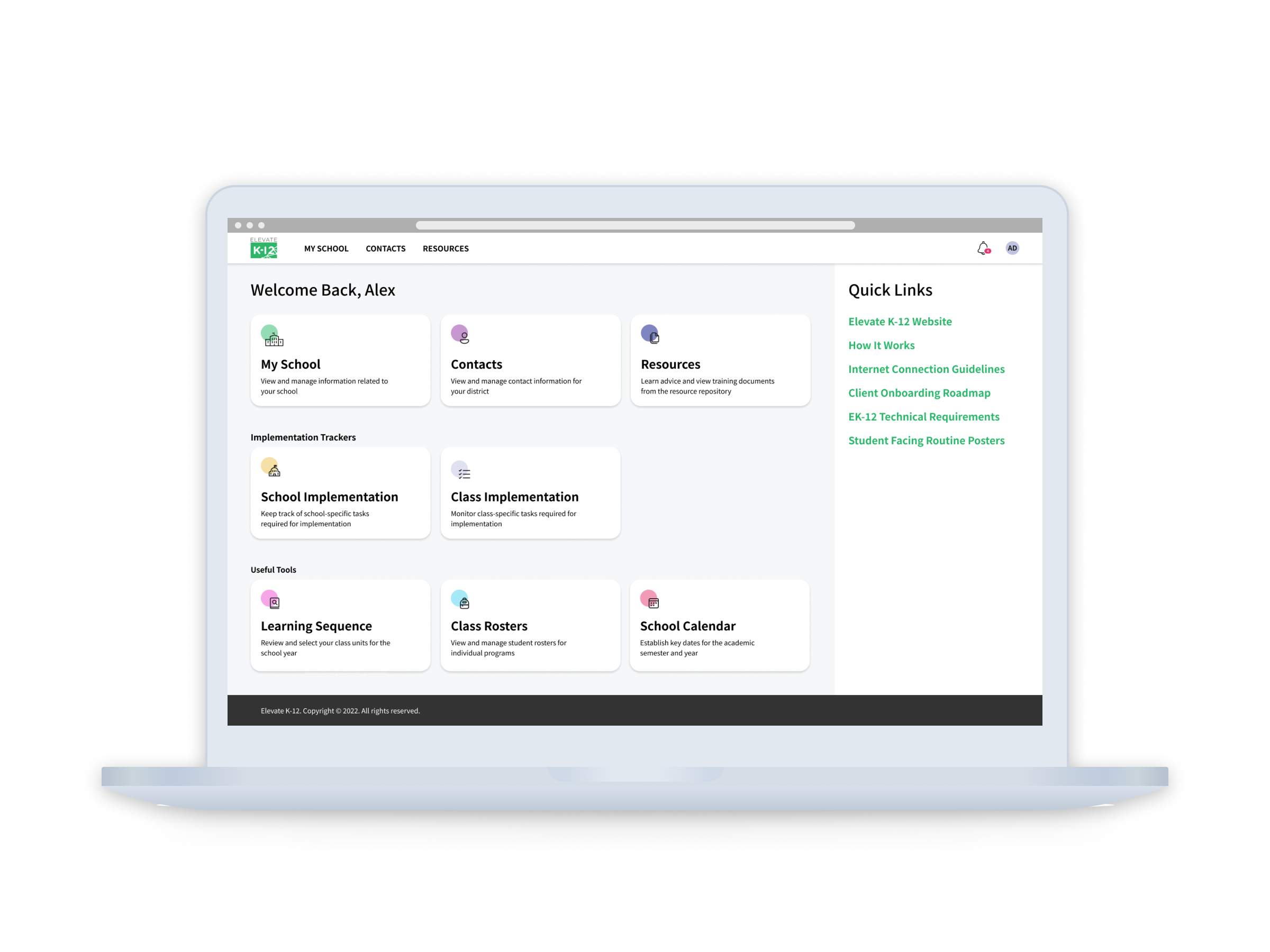
Empowering Educators
Imagine a world drowning in emails. For Elevate K-12, this wasn't a hypothetical – it was the daily reality. Every question, every resource request, even something as fundamental as a teacher sharing their availability, became another thread in an ever-growing digital tapestry of back-and-forth communication. There was no central hub, no easy way for educators, schools, and districts to connect or find what they needed independently. The sheer volume of manual email exchanges was not just inefficient; it was a significant drain on everyone's time, pulling teachers away from their true calling: the classroom.
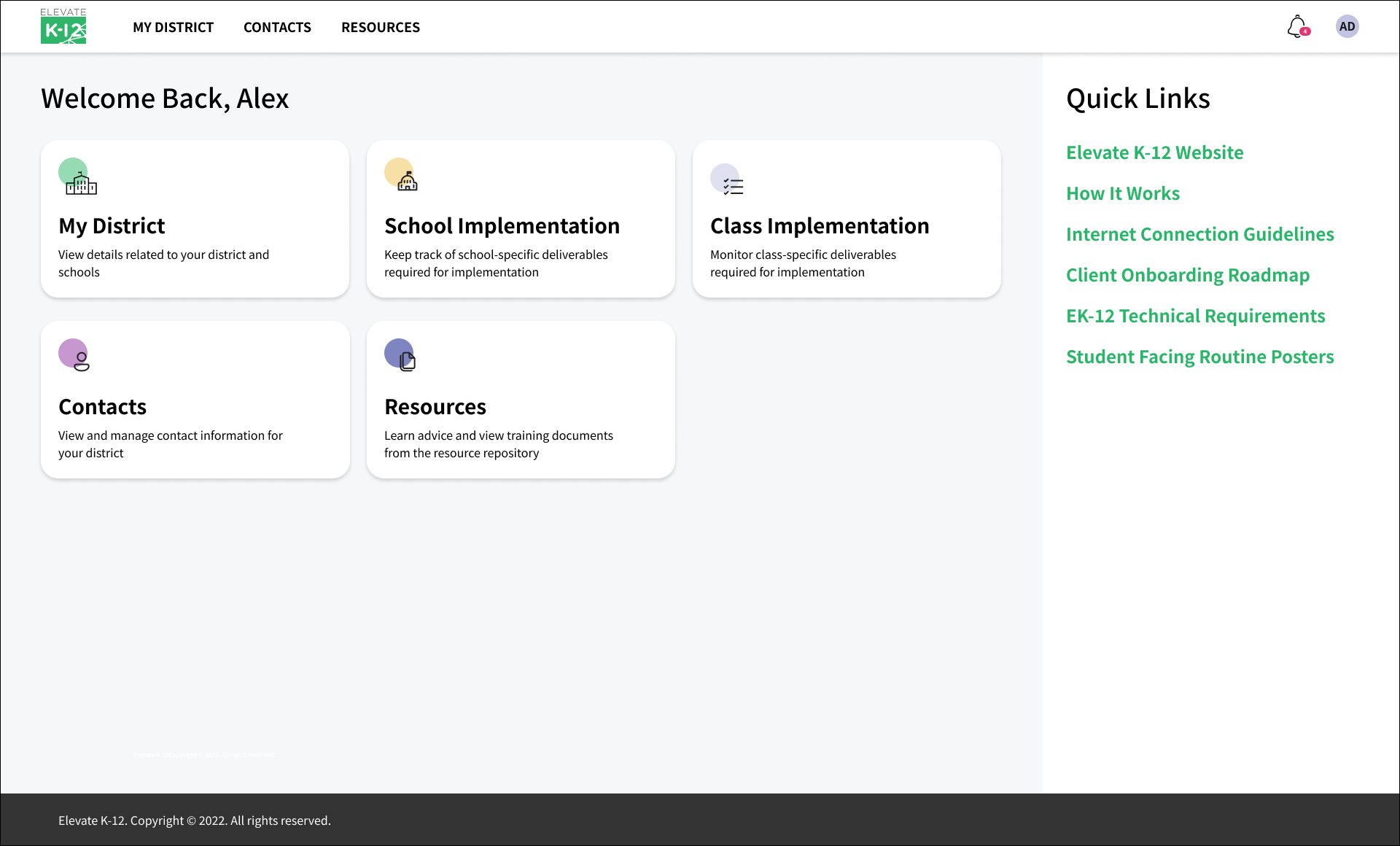
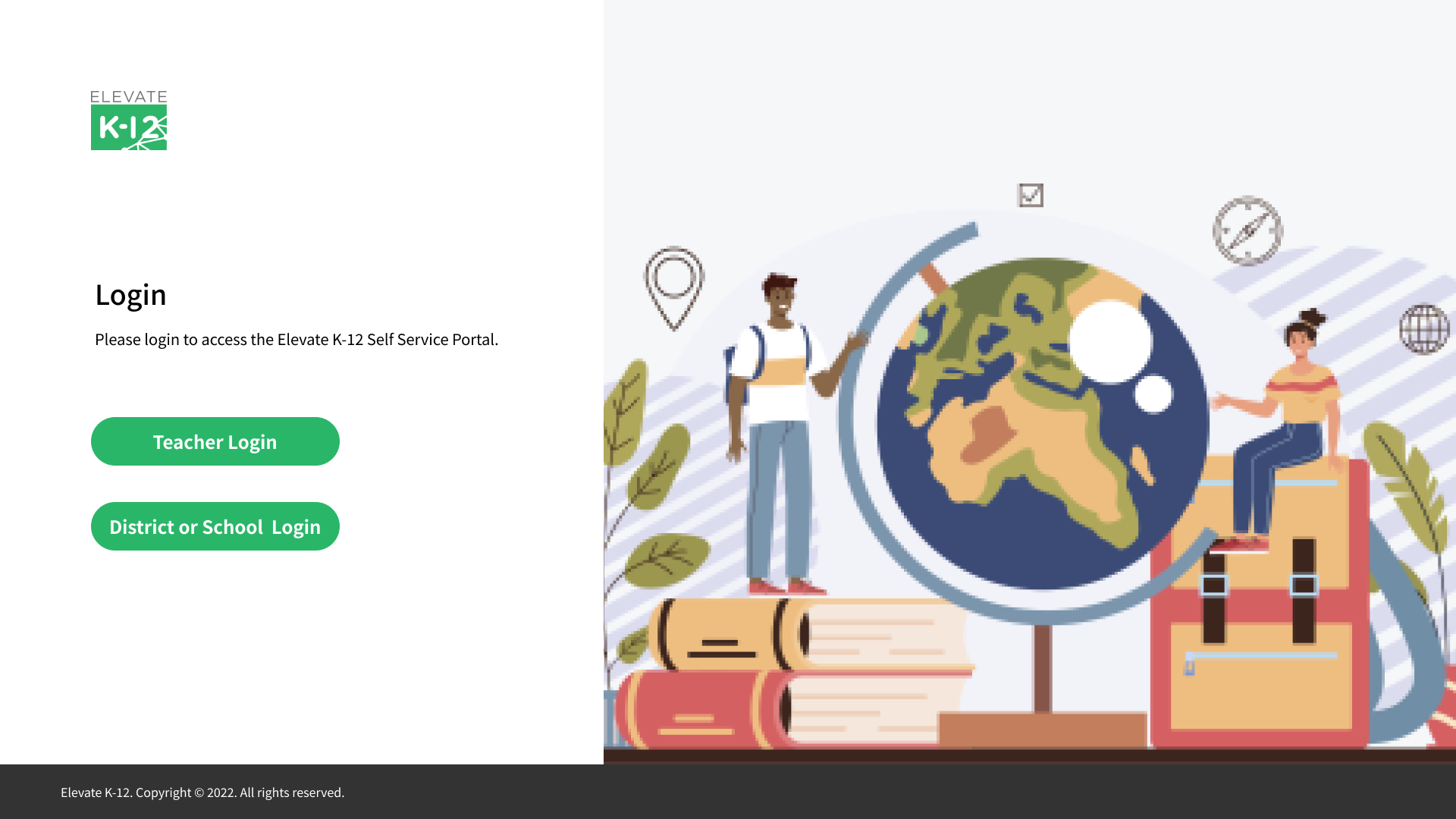
To address this, we proposed and developed a self-service portal utilizing Adobe XD and PowerApps Portal. The objective was to establish a centralized platform enabling educators to connect with the client and access resources independently, minimizing dependence on email. Recognizing an opportunity to also enhance the client's internal design processes, we were able to mid-way advocated for their transition from Adobe XD to the more collaborative Figma platform.
As the UI/UX Design Lead, I oversaw the project roadmap, contributed to user research efforts to thoroughly understand the needs of educators, districts, and administrators, and defined the visual direction for the self-service portal within the practical constraints of PowerApps Portal. The core objective was to alleviate the burden of constant email correspondence, particularly for tasks like managing teacher requests and picking up substitution roles, ultimately allowing educators to dedicate more time to teaching.
UNDERSTANDING THE USER NEEDS
While the client provided their valuable perspective, validating these pain points with end-users was essential. Our target users fell into three persona buckets: Teachers, Schools, and Districts (with distinct access needs despite some overlap). I collaborated with Tony, our Research Lead, to conduct user research sessions. Our process involved co-creating interview questions and alternating interview responsibilities based on availability. After data collection, we synthesized the findings, and Tony presented them to the client for decision-making.
(Omniscient Cathy speaking here: Our research yielded significant insights into user pain points. However, the client ultimately opted for a different direction, meaning our designs ultimately didn't address roughly 90% of the major issues we uncovered. We raised this internally and with the client, but budgetary constraints led to a decision to focus on smaller, more easily achievable wins.)
CRAFTING A SEAMLESS SELF-SERVICE
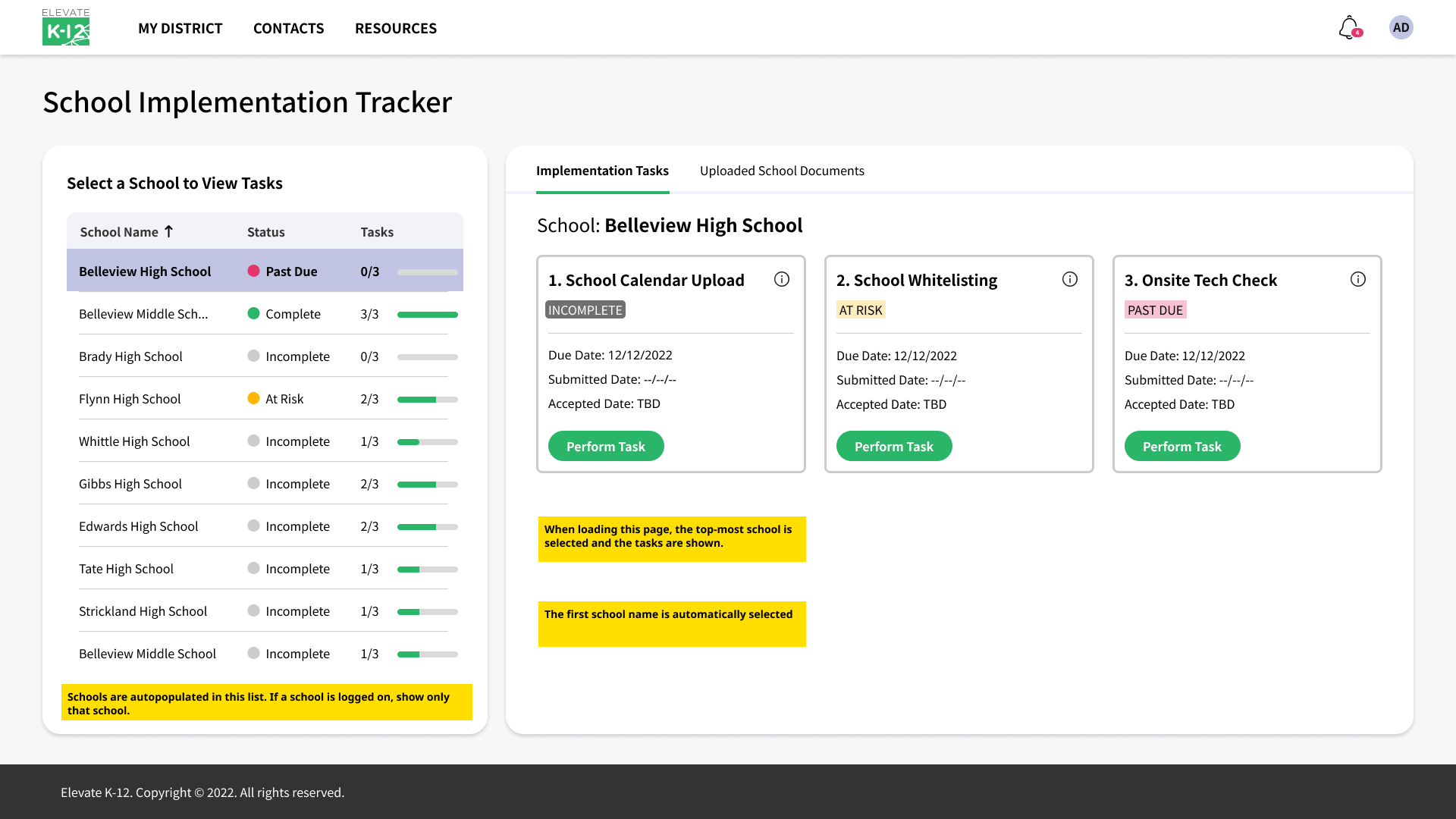
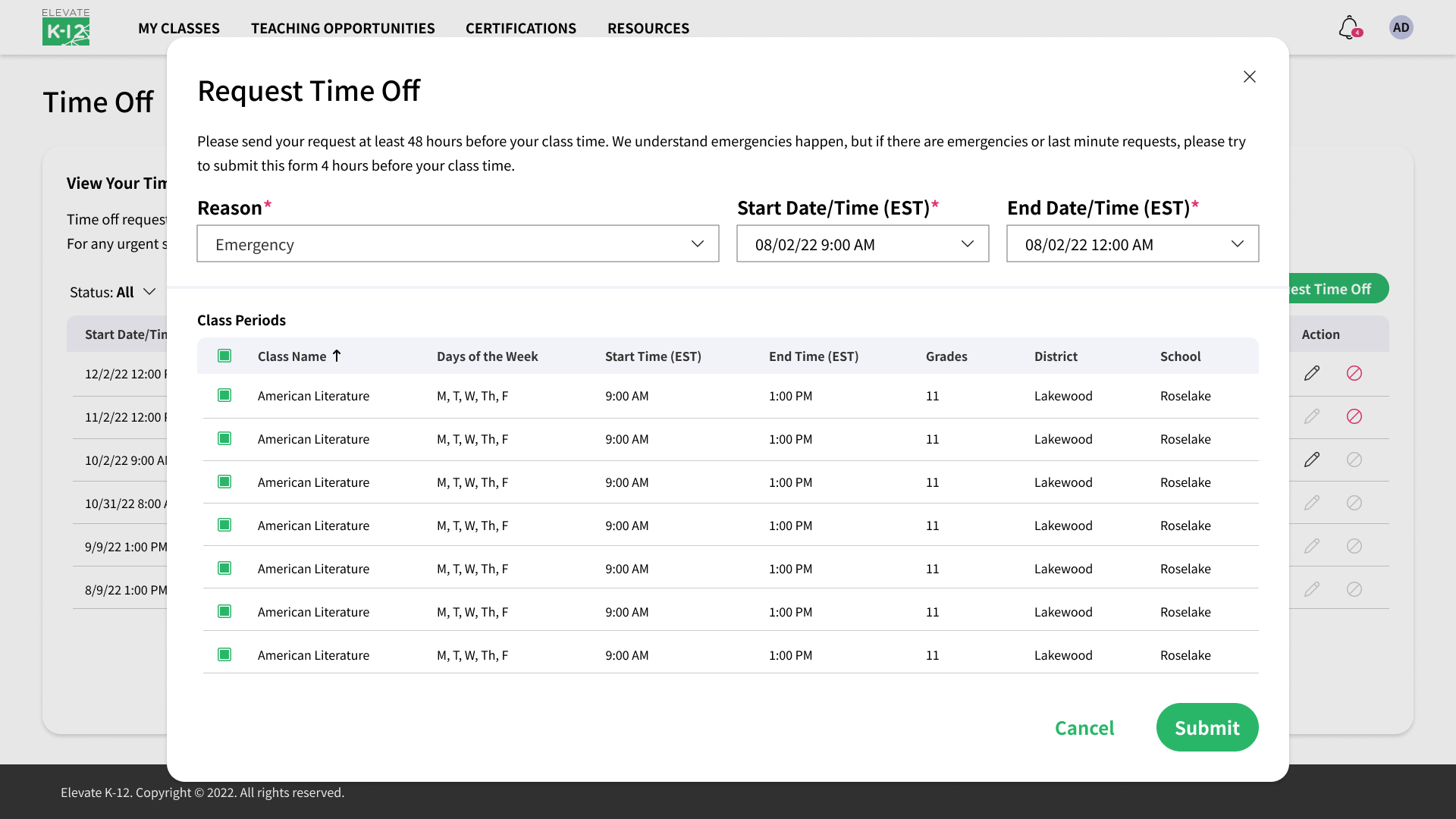
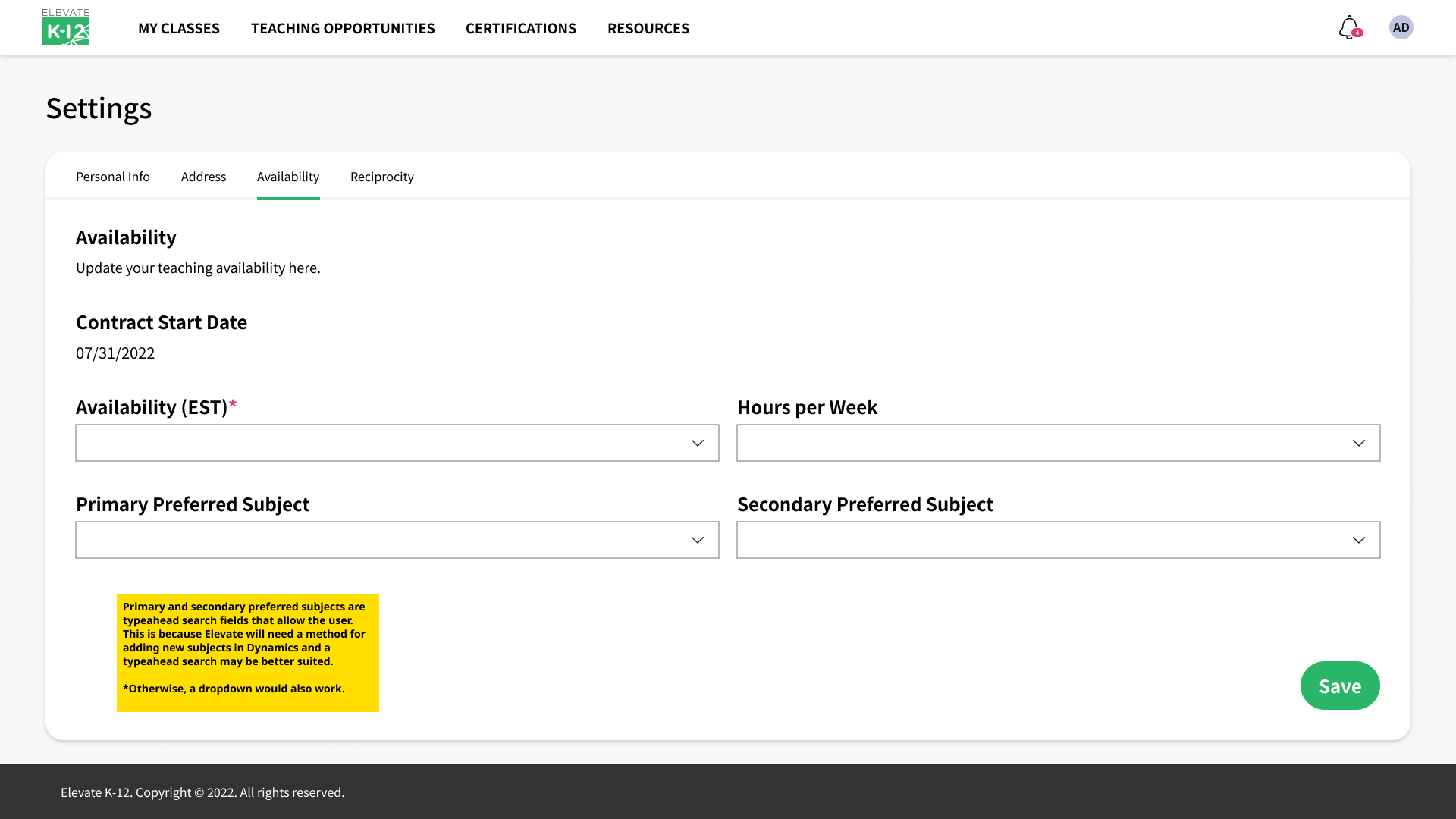
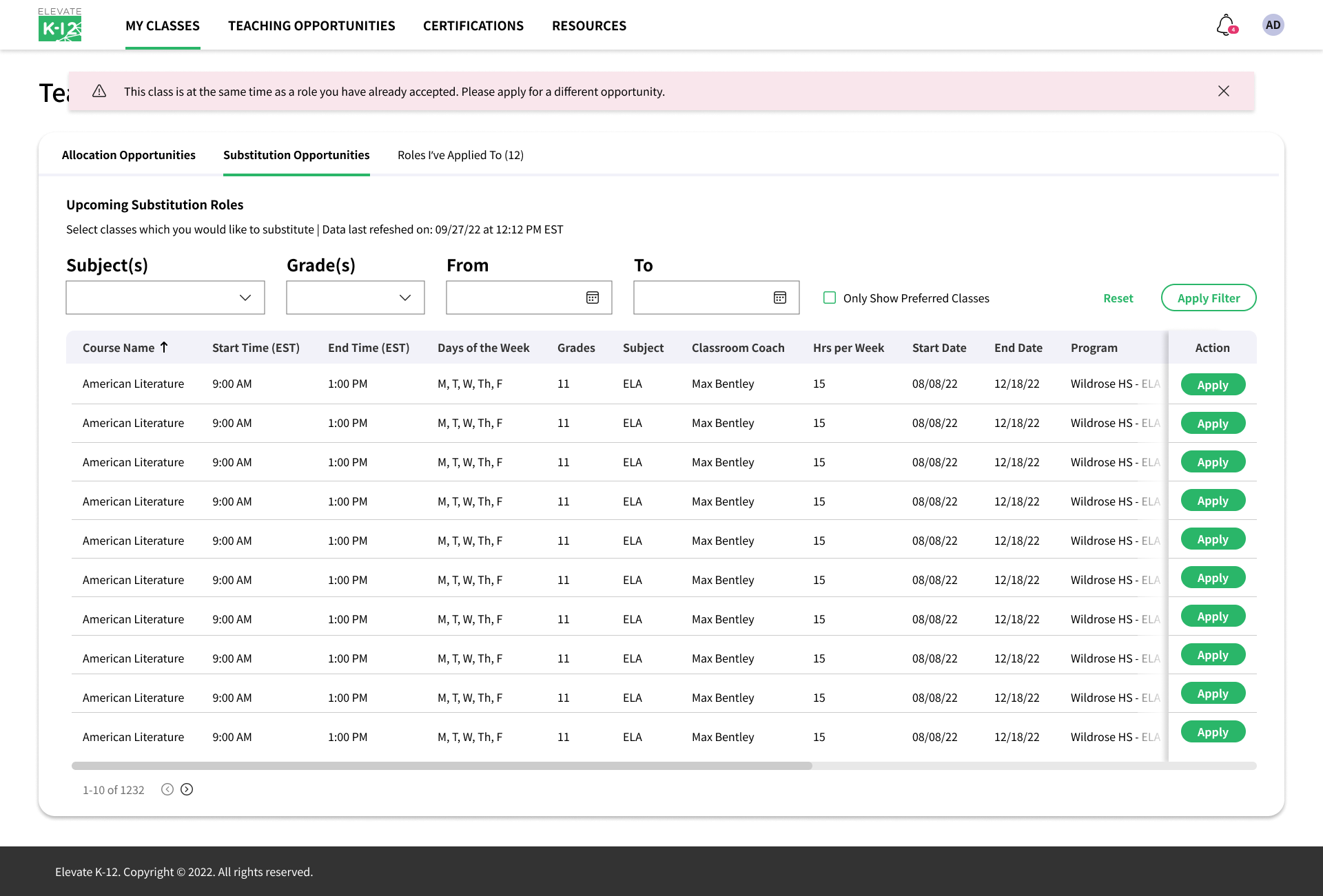
The design vision focused on an intuitive and efficient platform, empowering educators with easy access to information and streamlined communication. My primary goal was to minimize time, clicks, and the frustration of email back-and-forth. A significant challenge involved managing numerous, complex data tables with essential but excessive columns. In such design constraints, adapting standard practices becomes necessary. Much of the project centered on overcoming seemingly impossible limitations, requiring a strategic balance between visual aesthetics (white space, minimal clutter) and core functionality to directly benefit our users. Prioritizing impactful features often meant making calculated compromises on visual minimalism, but this was also partially due to development limitations of the tool chosen (PowerApps Portal).

MORE TIME FOR WHAT MATTERS MOST
Ultimately, this project wasn't just about designing a portal; it was about giving educators back their most precious resource: time. By tackling the inefficiencies of endless email chains and creating a direct pathway to information and support, we didn't just streamline communication – we liberated hundreds of hours annually for our client and fostered a more productive and satisfied educational community.
While navigating design challenges and client constraints, the focus remained steadfast: to empower educators to spend less time on administrative hurdles and more time on what truly matters – teaching. The successful implementation of this self-service solution stands as a testament to the power of user-centered design in driving tangible impact and fostering meaningful connections.

Based in Atlanta, GA.
©2025.